
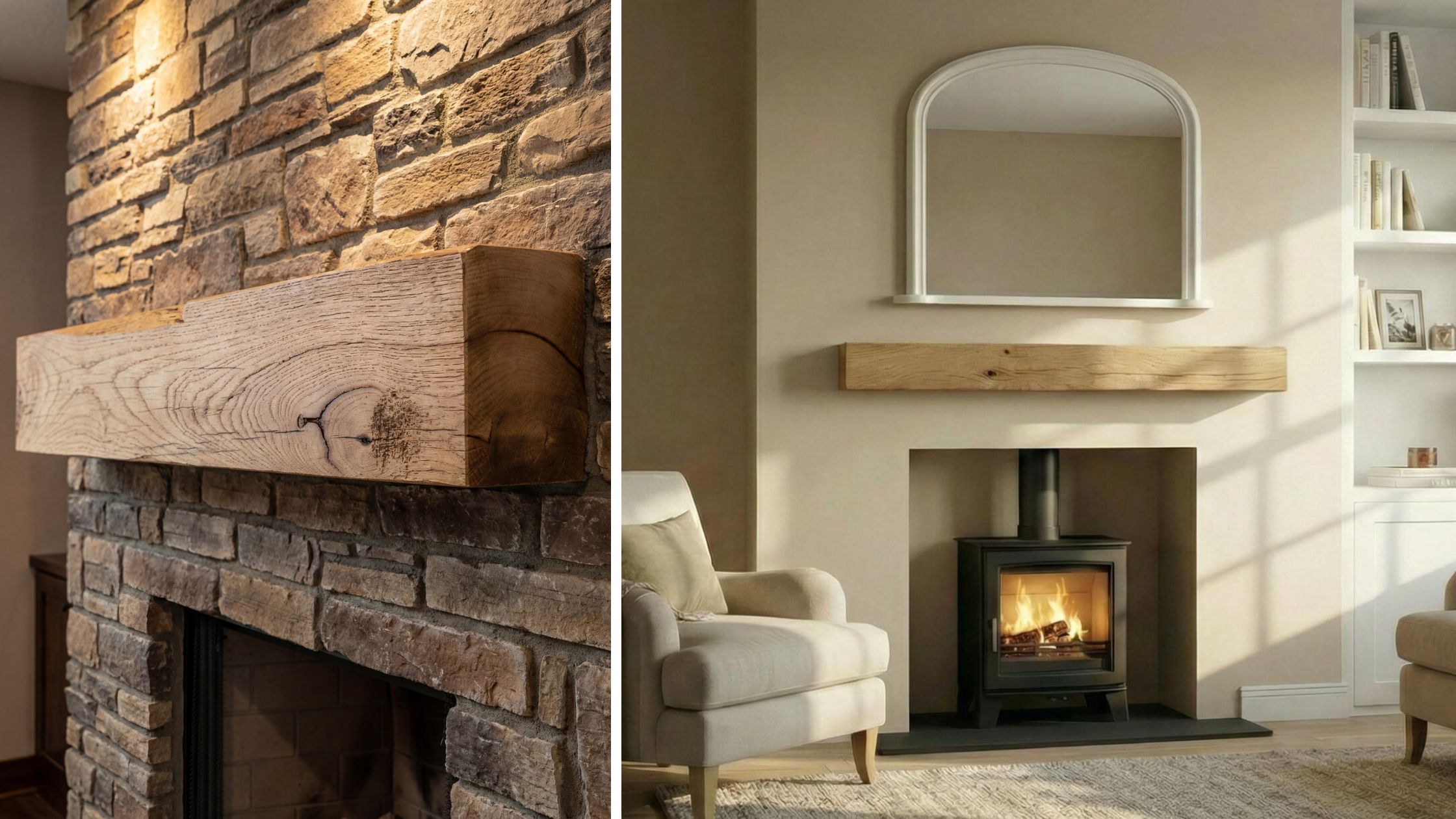
All our shelving and mantels are available in a choice of oak and pine, with our furniture range primarily featuring pine alongside a selection of oak pieces. Each timber type offers its own unique qualities, meaning one may be better suited to your needs, expectations and the style of your home.
In the following guide, we break down the key differences between oak and pine to help you when buying your shelving, mantels and furniture. Whether you're looking for durability, character or value, our aim is to help you shop with confidence so you can create a home of wooden furniture that looks right and feels right for your everyday living.
Watch Lauren, our customer service advisor, describe the key differences between oak and pine:
Differences between Oak and Pine:
Advantages of Solid Oak:
- Strong and load-bearing - can support more weight without bowing
- Distinctive grain and premium look - great for statement pieces
- Adds value and timeless appeal - often seen as a higher-end material
- Resistant - minimal to no wear and dents compared to softer wood
Disadvantages of Solid Oak:
- More expensive - due to slow growth and density
- Heavier to handle and install - may require more secure fixings
- Can develop natural splits as it settles - part of its natural character, but its irregularity might not be for everyone
Advantages of Solid Pine:
- More affordable - great for budget-friendly projects
- Lightweight and easy to install - ideal for DIY
- Versatile appearance - works in both modern and rustic interiors
- Natural character - Organic warm tones with rustic knots
Disadvantages of Solid Pine:
- Softer and less dense structure - means it can be more prone to dents and scratches
- Lower load capacity - compared with oak
- Grain and finish - can feel less striking and rustic than oak

Frequently asked Questions about our wood types:
Hardwood or Softwood?
Wood is categorised as either a hard or soft wood, a distinction based on the tree's biology and growth rather than just how "hard" the timber feels. This classification reflects the genetic structure of the tree, which in turn influences the wood's density, grain, and overall performance. As a result, oak and pine differ significantly, oak tends to be denser and more structurally complex, while pine is lighter with a simpler grain structure.
Is oak a hardwood?
Yes, oak is a classic hardwood. Hardwoods are known for their strength, density and durability, making them more resistant to wear and everyday use. This is why oak is often chosen for shelving, mantels and furniture where longevity and a premium, solid feel is a desired look.
Is pine softwood?
Pine is a softwood. It is generally lighter in weight and less dense, which makes it easier to handle, work with, and install. Pine usually features a straighter, more uniform grain, often with knots that add a warm, rustic character. While it doesn't have the same density or pronounced grain features as hardwood, it offers a softer and more understated look that suits a wide range of interiors.
What is the cost difference with Oak and Pine?
Is oak more expensive?
Yes, oak is typically more expensive, and for good reason. It comes from slow-growing trees, making it less readily available and more resource-intensive to produce. With oak, you're investing in a denser, heavier piece of timber that offers superior strength, longevity and a more premium feel. Its rich grain, natural features and timeless appearance make it a popular choice for a statement shelving and mantels designed to last for years to come.
How expensive is pine?
The pine tree is faster-growing, making it far more abundant and therefore more affordable. This accessibility is what drives the lower price, not a lack of quality. Solid pine is still a durable, reliable material, especially when compared to alternatives like MDF or flat-pack furniture. It offers excellent value, combining natural character, practicality and versatility at a more accessible price point.
Oak vs Pine: Weight and Strength
Oak is heavier, denser timber, which means it requires a bit more care during installation but that added weight comes with real benefits. Its strengths allows it to support greater loads, making it ideal for shelves and mantels that need to be both functional and long-lasting. Oak also brings a more substantial, premium feel to a space, adding a sense of permanence and quality.
Pine, by comparison, is lighter and therefore easier to handle, making installation simpler and more accessible for DIY projects. While it doesn't carry quite the same load capacity or durability as oak, it still performs very well in everyday use. In fact, when compared to flat-pack materials or MDF, solid pine remains a strong and reliable option.
Oak vs Pine: Appearance and Grain
Oak is known for its bold, distinctive grain, offering a rich, textured appearance that immediately draws the eye. This natural character makes it a standout choice for feature pieces like mantels and shelving. In its natural, unwaxed state, oak typically has a light golden tone that gradually deepens and matures over time, adding warmth and depth to a space. It often showcases organic details such as waney edges, knots, splits and pronounced grain patterns, all of which celebrate the raw beauty and individuality of the timber - no two pieces are ever exactly the same.
Pine, on the other hand, has a lighter, softer appearance, with warm pale tones that suit both modern and rustic interiors. Its grain is generally straighter and more uniform, giving it a cleaner, more understated look compared to oak. One of pine's defining features is its knots, typically dark and circular, which bring a relaxed, country-style charm. Overall, pine offers a smoother, more subtle aesthetic, making it a versatile option for a wide range of styles while still retaining natural character.
| Oak | Pine | |
| Strength | Very strong and durable | More prone to dents and scratches than oak |
| Weight | Heavier, gives a premium look but can be more difficult to install | Lighter and easier to install |
| Grain | Distinctive grain, waney edges and splits | More regular with rustic knots |
| Cost | More expensive | More affordable |
Ready to shop Oak or Pine?
Before investing in one of our shelves, mantels or furniture pieces, reflect and consider what you want from your solid wood. All of our pine and oak options offer plenty of natural character, rustic charm and the strength of solid wood.
But now that you've got a clearer idea of the differences between oak and pine, explore our full range of shelving and mantels to find the perfect piece to elevate your space.
Share:
Floating Shelves vs Brackets: Which one works best for you?
Coffee Table Size Guide: How to Choose the Right Size Coffee Table